
Newsletter Q4 2013


Q3 2013 Newsletter
Happy Christmas to all our clients and subscribers!
Welcome to our summary of the best of the sustainability and environmental compliance news items that appeared on our website www.environet.ie over the past quarter. We now have over 500 Irish environmental professionals subscribing to our service. This is a free service, issued every quarter. If you wish to unsubscribe please click the link at the end of this mail.
Best Regards
Gerard Kelly
Phone: +353-58-51155
Mobile: +353-87-8221756
Email: gerard.kelly@environet.ie
Web: www.environet.ie
Twitter: @EnvironetIre
CONTENTS
Minister Decides to Scrap Proposed Packaging Tax (13/9/2013)
Soil Framework Directive may be Withdrawn (18/11/2013)
Biofuels – More Problem Than Solution? (11/11/2013)
Draft Guidance on Wind Turbines Issued (11/12/2013)
Mandatory Carbon Emissions Reporting (31/10/2013)
Minister Decides to Scrap Proposed Packaging Tax (13/9/2013)

In the Programme for Government further measures to reduce packaging waste were to be considered, including a ‘levy on packaging’. We already have an EPR (Extended Producer Responsibility) scheme here in the form of Repak. While Repak has its issues it is generally seen as being a relatively fair method of assigning the cost of recycling to those who put most packaging on the market.
The decision by Phil Hogan not to proceed with an additional packing levy is to be welcomed for the following reasons:
- No other EU country has applied both an EPR scheme and a packaging levy at the same time;
- There would be additional costs on business and public administration with little additional benefit;
- Repak fees already constitute a packaging tax of sorts;
- Repak fees are generally accepted as being proportionate.
Soil Framework Directive may be Withdrawn (18/11/2013)
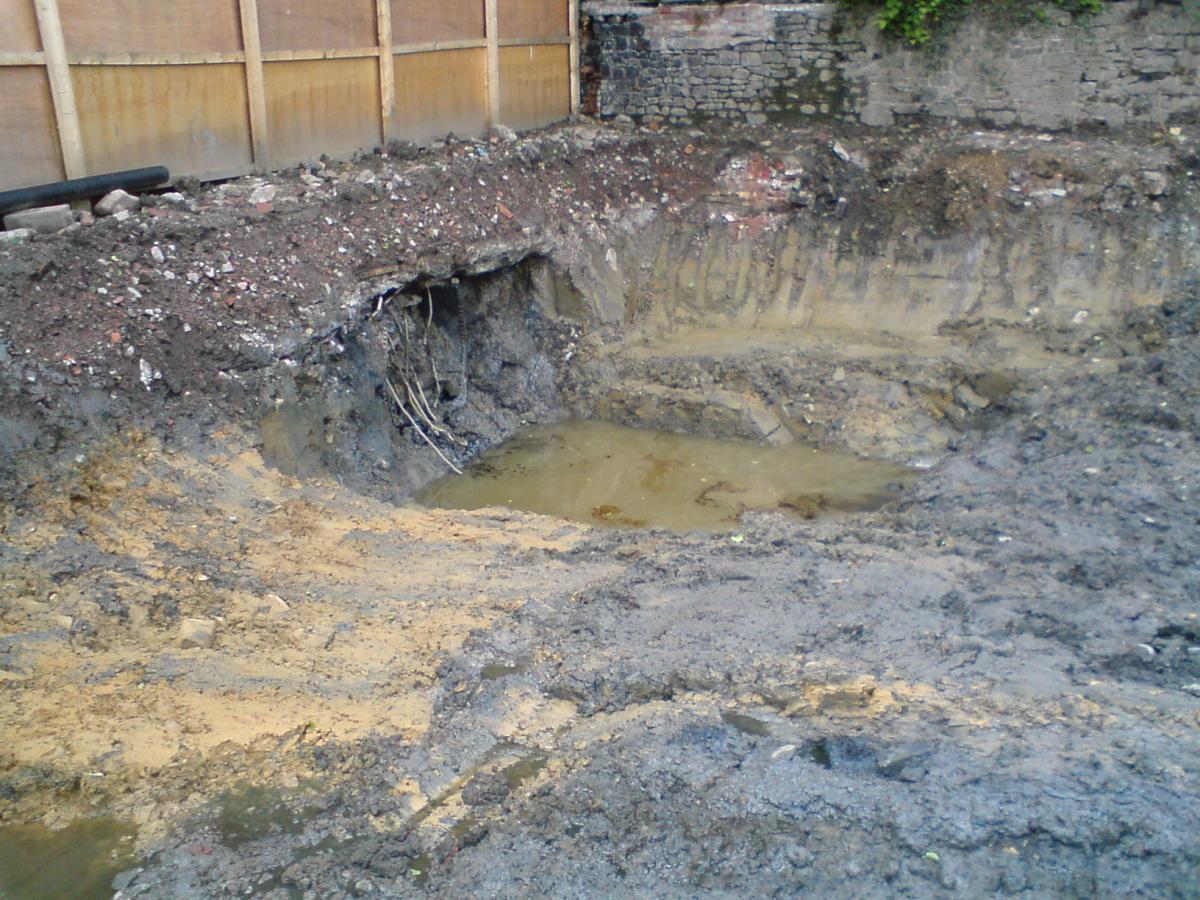
The EU Commission recently published a statement where it proposes a withdrawal of a proposal for a Soil Framework Directive (SFD).
The EU Commission stated:
“The proposal was made in 2006 and is pending decision by the co-legislators since. Despite the efforts of several presidencies, the council has so far been unable to reach a qualified majority on this legislative proposal due to the opposition of a number of member states constituting a blocking minority on the grounds of subsidiarity and proportionality. When considering the withdrawal, the Commission will examine how the objectives of the proposed directive can be best achieved.”
A number of countries have expressing concerns over the expense involved in meeting its requirements, despite publication of a revised draft aimed at achieving compromise and agreement on a way forward. However its possible withdrawal has taken many by surprise.
The proposed directive places a considerable burden on the regulator, involving data gathering and assessment. There is also a requirement for landowners to provide soil status reports whenever sites are sold. This would also have applied to domestic properties.
If the proposed SFD is withdrawn it is likely that it will either be completely redrafted or that land contamination regulation will be left to individual member states.
Biofuels – More Problem Than Solution? (11/11/2013)

A number of years ago biofuels were being touted as the answer to fuel shortages, carbon emissions and sustainable living. Nowadays their impact on global food prices and their carbon footprint are being re-evaluated.
In September the European Parliament voted to significantly reduce the amount of biofuels made from food crops by 2020. This was in response to concerns over the energy source's environmental and ethical sustainability.
Many argue that biofuels made from sugar, corn or soybeans add as much or even more to greenhouse gas emissions as the fossil fuels they are meant to replace. Others criticise the burning of crops which displaces food production and drives up prices for basic staples while there are still millions of malnourished worldwide.
The European Parliament voted to lower the amount of fuel that must come from renewable sources by 2020 from 10 percent to 6 percent.
The decision also calls for advanced biofuels, based on seaweed or certain types of waste, to represent at least 2.5 percent of transportation's energy consumption by 2020.
The overall target of 10 percent was initially established in 2008, but the Commission last year proposed a 5 percent cap for food crop-based biofuels.
Parliament's environment committee had initially voted in favour of a cap of 5.5 percent while the industry committee sought a limit of 6.5 percent.
The European Renewable Ethanol Association rejected the suggestion that biofuel crops are putting too much pressure on food production. The group also argued that the impact of biofuels on food prices is greatly exaggerated, while it criticises limiting what it says is one of Europe's growing industries.
Draft Guidance on Wind Turbines Issued (11/12/2013)
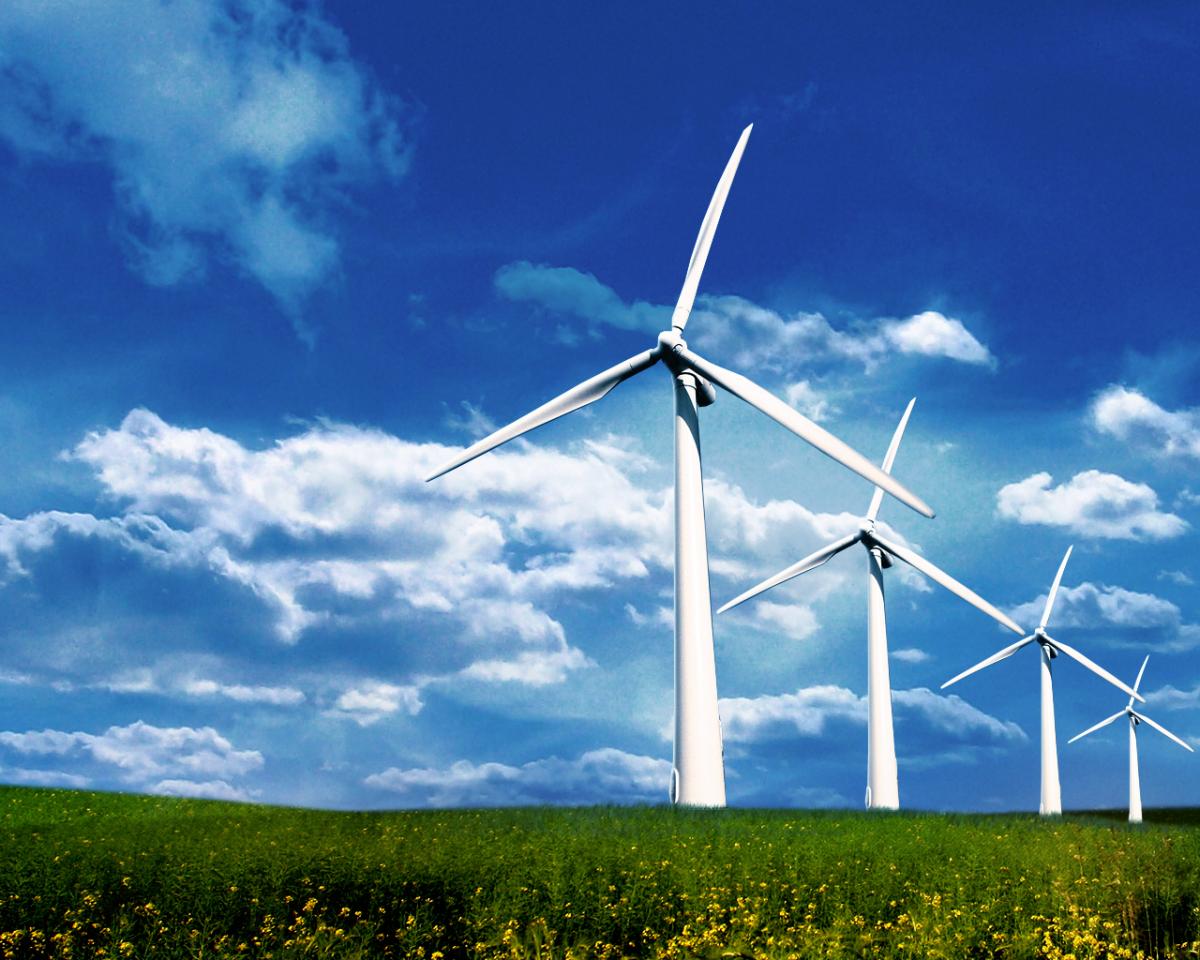
Everyone agrees that harnessing wind power is a good idea but living close to a wind turbine can cause issues particularly in relation to noise. Flicker can also be a problem if the turbine blades cast a shadow on a property.
The Government has recently produced draft Guidelines for public consultation.
When finalised, these guidelines will replace the 2006 Wind Energy Development Guidelines.
The revised noise and shadow flicker sections of the Wind Energy Development Guidelines being put out for public consultation today proposes;
- The setting of a more stringent absolute noise limit (day and night) of 40 decibels (dB) for future wind energy developments. This limit is an outdoor limit, in general the reduction of noise levels between the outside of a dwelling and inside would be approximately 10 decibels.
- A mandatory setback of 500 metres between a wind turbine and the nearest dwelling for amenity considerations.
- A condition be attached to all future planning permissions for wind farms to ensure that there will be no shadow flicker at any dwelling within 10 rotor diameters of a wind turbine. If shadow flicker does occur, the wind energy developer or operator will be required to take necessary measures, such as turbine shut down for the period necessary, to eliminate the shadow flicker.
Submissions on the draft Guidelines, prepared by New Zealand based Marshall Day Acoustics can be made up to the 21st February 2014.
The proposed revisions to the guidelines and the Marshall Day Acoustics noise study are available online at www.environ.iein addition to information on making written submissions during the public consultation period.
Mandatory Carbon Emissions Reporting (31/10/2013)
From October 1st 2013 all publicly quoted UK incorporated companies must measure and report greenhouse gas (GHG) emissions in its directors’ report alongside its financial statements for the first financial year ending on or after the 30th September 2013. This is likely to increase the reporting requirements on facilities in Ireland owned by publicly quoted UK parent companies.
Furthermore they must also include additional information on human rights issues, and gender representation across the company in a separate strategic report.
The new UK regulation states the companies must report the annual quantity of emissions for activities for which they are responsible, including the combustion of fuel and the operation of any facility.
Companies must also report emissions resulting from the purchase of electricity, heat, steam or cooling by the company for its own use in tonnes of carbon dioxide equivalents.
This means that included emissions to be measured and reported on will be those equivalent to Greenhouse Gas Protocol scopes 1 (direct emissions) and scope 2 (indirect emissions). Scope 3 emissions inclusion is optional, for example, emissions from leased vehicles.
Emissions (equivalent of scope 1 and 2) from global operations for which the reporting company is responsible must also be included. Therefore UK companies with overseas operations will require a set of global emission factors.
Any excluded or missing emissions or information must be highlighted and explained within the report.
Emissions from all Kyoto greenhouse gases (carbon dioxide, methane, nitrous oxide, hydrofluorocarbons, perfluorocarbons and sulphur hexafluoride) must be included, but reported as CO2 equivalent.