
Q4 2012 Newsletter

Happy New Year to all clients and subscribers! Welcome to our summary of industrial environmental sustainability and compliance news items that appeared on our website www.environet.ie over the past quarter. We now have over 500 Irish environmental professionals subscribing to our service. This is a free service, issued every quarter. If you wish to unsubscribe please click the link at the end of this mail.
You can now follow us on Twitter at http://twitter.com/#!/EnvironetIre where our news items will also appear.
Best Regards
Gerard Kelly
CONTENTS
EPA Launches ALDER (17/1/2013)
Ireland’s Climate Change Targets (19/11/2012)
EEA issues Climate Change Report for Europe (23/11/2012)
EPA issues Drinking Water Report – Lead Piping Still an Issue (12/12/2012)
Impact of the IED on Large Combustion Plants (2/1/2013)
App of the Quarter – CamScanner (14/1/2013)
EPA Launches ALDER (17/1/2013)

The EPA has recently announced the impending launch (on 21st January 2013) of a new web portal called ALDER https://alder.edenireland.ie/. It stands for Application for Licensing Data and Environmental Reporting. All holders of IPPC and Waste Licenses will be required to submit monitoring and enforcement data through this portal.
The portal itself allows users to launch an application called LMA the ‘Licensing Management Application’. This application will be used to upload compliance reports, monitoring reports, incidents etc.
ALDER/LMA is intended to be a more efficient means of communicating with the EPA. A facility will be able to send relevant documents/notifications to the EPA electronically without having to submit three hard copies and will be able to see the status of any returns which are made to the Agency (monitoring reports, requests for changes to processes, etc). It will also be possible to see what issues are currently under investigation by the EPA in relation to a licence and what the current status is (e.g. what is required to be done and when).
Please note that the ALDER system should not be used to submit AER/PRTR returns for 2012. These should be submitted using the current system.
Ireland’s Climate Change Targets (19/11/2012)
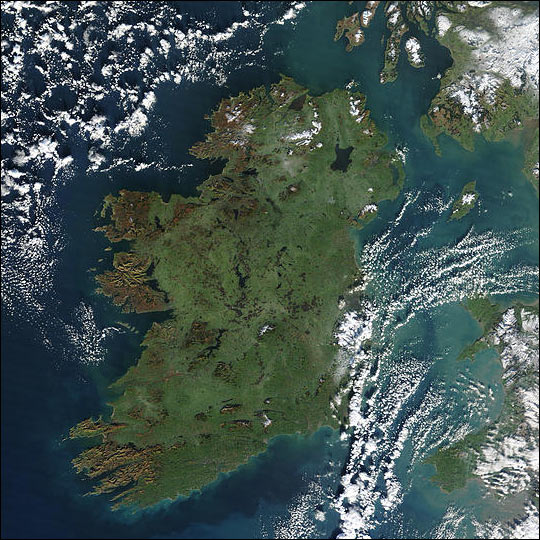
Ireland has 2 main targets related to the reduction of Greenhouse Gas Emissions, the Kyoto Protocol and EU 2020.
With regard to Kyoto, Ireland committed to reducing, by 2012, emissions to 13% above those in 1990. It appears that we will meet this commitment through a combination of the recession and the closure of many companies with a very large energy footprint such as IFI, Waterford Crystal and Irish Steel.
Indeed the reduction in 2011 emissions when compared to 2010 is stark, with analysts attributing most of the decrease to the economic downturn.
Ireland’s greenhouse gas emissions fell by 6.7% in 2011 to 57.34 million tonnes.
Key emissions reductions in 2011 were as follows:
- Energy emissions (principally electricity generation) decreased by 10.5%;
- Residential sector emissions decreased by 15.6%;
- Industry and Commercial emissions decreased by 10.7%;
- Transport sector emissions decreased 2.7%;
- Agriculture emissions decreased by 1.9%.
However the low hanging fruit has been picked and the EPA believes that we will not meet our reduction targets under EU 2020, which for Ireland is a 20% reduction in non-Emissions Trading Scheme (ETS) emissions by 2020, from a 2005 baseline. As allocations under the ETS will, from 2013, be EU wide (as opposed to country specific) Ireland’s performance can really only be measured against non-ETS emissions.
The EPA projects that we will not meet our targets from 2015 onwards. One of the main reasons for this will be the expected increase in agricultural output. This is estimated to grow significantly up to 2020, mainly due to the lifting of EU quotas on production.
So from 2015/16 onwards its quite likely that Ireland will need to purchase a significant quantity of carbon credits at taxpayers’ expense. It is as yet unclear how the Government plans to address this issue in a coordinated way.
EEA issues Climate Change Report for Europe (23/11/2012)
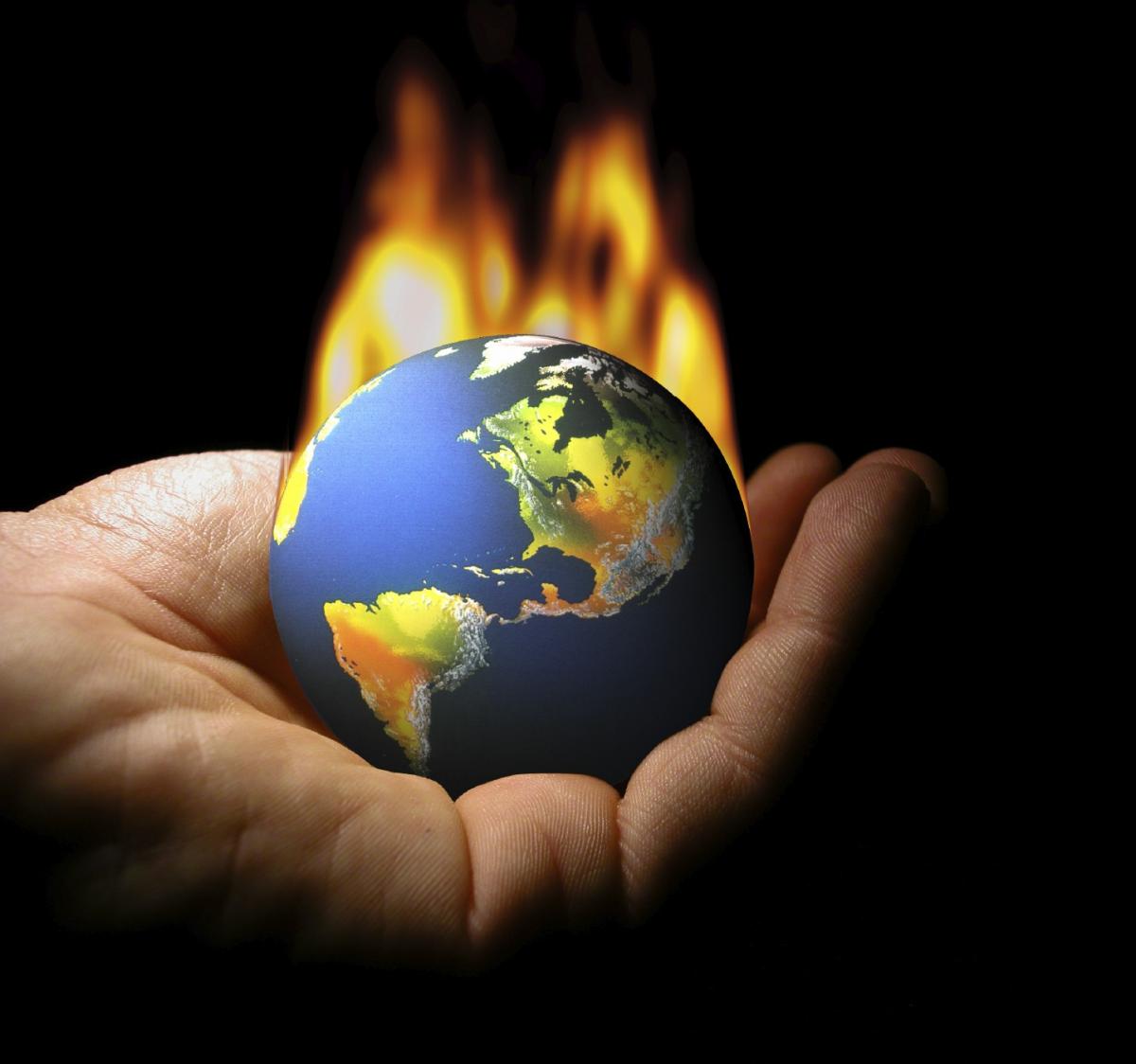
On November 21st the Copenhagen based European Environment Agency released a major indicators based report on the current and predicted impact of climate change on EU countries. Some of the main conclusions are:
- The last decade was the warmest on record in Europe, with land temperatures 1.3° C warmer than the pre-industrial average. Some models predict that Europe will be 2.5–4° C warmer in the latter part of the 21st Century, compared to the 1961–1990 average;
- Heat waves have increased in frequency and length, causing tens of thousands of deaths over the last decade. However, cold-related deaths are projected to decrease in many countries;
- While precipitation is decreasing in southern regions, it is increasing in northern Europe. These trends are projected to continue. Climate change is projected to increase river flooding, particularly in northern Europe, as higher temperatures intensify the water cycle. This is likely to have a significant impact on areas susceptible to river flooding in Ireland;
- River flow droughts appear to have become more severe and frequent in southern Europe. Minimum river flows are projected to decrease significantly in summer in southern Europe but also in many other parts of Europe to varying degrees;
- The Arctic is warming faster than other regions. Record low sea ice was observed in the Arctic in 2007, 2011 and 2012. Melting of the Greenland ice sheet has doubled since the 1990s, losing an average of 250 billion tonnes of mass every year between 2005 and 2009. Glaciers in the Alps have lost approximately two thirds of their volume since 1850 and these trends are projected to continue;
- Sea levels are rising, raising the risk of coastal flooding during storm events. Global average sea levels have risen by 1.7mm a year in the 20th century, and by 3mm a year in recent decades. Future projections vary widely, but it is likely that the 21st century sea-level rise will be greater than during the 20th century;
- Climate change plays a part in the transmission of certain diseases. For example, it allows the tick species Ixodes ricinus to thrive further north, while further warming may make parts of Europe more suitable for disease-carrying mosquitos and sandflies. The pollen season is longer and arrives 10 days earlier than 50 years ago, also affecting human health;
- Many studies have measured widespread changes in plant and animal characteristics. For example, plants are flowering earlier in the year, while, in freshwater, phytoplankton and zooplankton blooms are also appearing earlier. Other animals and plants are moving northward or uphill as their habitats warm. Since the migration rate of many species is insufficient to keep pace with the speed of climate change, they could be pushed towards extinction in the future;
- While there may be less water available for agriculture in southern Europe, growing conditions may improve in other areas. The growing season for several crops in Europe has lengthened and this is projected to continue, alongside the expansion of warm-season crops into more northerly latitudes. However the yield is projected to fall for some crops due to heat waves and droughts in central and southern Europe. Overall, with the possible exception of areas prone to flooding, agriculture in Ireland is expected to generally benefit from rising temperatures;
- As temperatures rise, demand for heating has also fallen, saving energy. However, this must be balanced against higher energy demands for cooling during hotter summers.
The full report can be downloaded here http://www.eea.europa.eu/publications/climate-impacts-and-vulnerability-2012.
EPA issues Drinking Water Report – Lead Piping Still an Issue (12/12/2012)
The EPA has issued its 2011 Drinking Water report. The main conclusions/recommendations are:
Public Drinking Water Supply under the direct control of Water Services Authorities
- 200 (59%) of the original 339 public water supplies placed on the EPA Remedial Action List (RAL) have completed the necessary action programmes and have been either replaced, upgraded or have improved operations. Three WSAs (Local Authorities) did not provide an estimation of the timeframe for the completion of remedial actions for 12 supplies, 10 of which were in Donegal.
- There are now 191 supplies on the EPA Remedial Action List, a significant number by any standards.
- There are 60 supplies identified as high risk where appropriate barriers to Cryptosporidium need to be installed.
- E. coli was detected in 12 (1.3%) public water supplies during compliance monitoring in 2011as compared to 20 (2.2%) supplies in 2010.
- At the end of 2011, all public water supplies had a chlorine monitor and alarm in place.
- Nitrate exceedances were reported in five public water supplies in 2011.
- 26 new boil water notices and five new water restrictions (serving approximately 40,000 persons) were put in place by 15 WSAs in 2011.
Public Group Water Schemes, Private Group Water Schemes and Small Private Supplies
- The level of non-compliance with the trihalomethanes limit in public group water schemes improved from 25.3% in 2010 to 12.4% in 2011. The incidence of failure to meet the trihalomethanes limit was higher than the parent public water supplies (10.9%) from which the water is taken, indicating that management of the networks needs to be improved. Trihalomethanes form when chlorine used for disinfection reacts with organic contaminants present.
- 46 schemes (10.2%) were found to be contaminated with E. coli at least once during 2011, down from 56 (11.6%) in 2010. The quality of drinking water in private group water schemes remains inferior to that in public water supplies.
One of the most significant issues yet to be adequately addressed is the contamination of drinking water by lead piping. There are generally 3 main types of water distribution piping;
- Water Main pipe which is the main distribution pipeline and is normally underneath a roadway or footpath;
- Communication Pipes linking the Water Main with the Water Meter. The communication pipeline is generally under the control of the WSA;
- Supply Pipe linking the Water Meter with the household. The Supply Pipe is generally under the control of the householder.
Currently there are 5 areas identified with significant amounts of Mains lead piping yet to be removed. These are Mallow, Lough Guitane, Longford, Ennis & Granard.
While the EPA has issued guidance regarding what councils should do in relation to lead piping, there does not seem to be a formal structure in place for the auditing of, and reporting on, Mains lead piping.
In relation to Communication pipelines the situation as reported in the Drinking Water Report appears to be that the WSA will only be asked to replace lead Communication pipelines where the householder agrees to replace Supply piping under their control. Surely the WSA should be replacing all lead piping under their control? While the EPA has issued Directions to WSAs in relation to Mains lead piping it does not appear to have done so for Communication piping.
The situation regarding local authority housing stock appears to be even more alarming as the WSA is responsible for addressing all lead piping issues, including Supply pipes. It appears that there is no clear policy in relation to the issue of lead piping in local authority housing stock and that such piping will only be replaced where an exceedance of the lead standard has been found.
Lead compliance levels reduce to10 µg/l in December 2013. Do we really need to wait for exceedances for coordinated action to be taken?
Impact of the IED on Large Combustion Plants (2/1/2013)
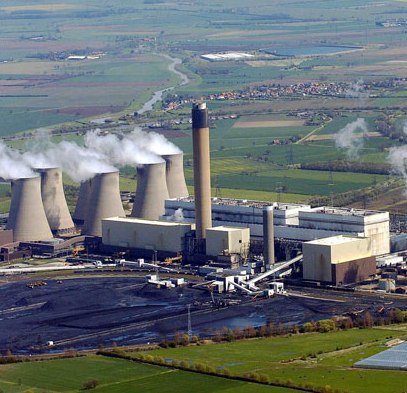
As reported here a number of months ago the Industrial Emissions Directive will revise and merge seven existing Directives, one of which is the Large Combustion Plants (LCP) Directive (2001/80/EC). LCP are those combustion plants with a rated thermal input ≥50 MW. Below is a summary of the main implications of the IED for LCP.
- New LCP must meet stricter emission limit values (ELVs) for nitrogen, sulphur oxides and particulates from 7 January 2013;
- Existing LCP do not become subject to any of the requirements until 1 January 2016;
- Up to June 2020, Member States may define transitional plans with declining annual caps for nitrogen oxides, sulphur dioxide and dust particles (Article 32);
- Industrial installations that are scheduled to close by the end of 2023 do not need to upgrade.
A number of derogations can be applied by Competent Authorities as follows;
- A derogation for a maximum of 6 months from the obligation to comply with the ELVs provided for sulphur dioxide where the operator is unable to comply with ELVs because of an interruption in the supply of low-sulphur fuel resulting from a serious shortage.
- a derogation from the obligation to comply with ELVs provided for in Article 30(2) and (3) where a combustion plant using only gaseous fuel has to resort to the use of other fuels because of a sudden interruption in the supply of gas. The period for which such a derogation is granted shall not exceed 10 days except where there is an overriding need to maintain energy supplies.
- The IED provides that for combustion plants firing indigenous solid fuel, which cannot comply with the ELVs for sulphur dioxide set down in the Directive, Member States may instead apply minimum desulphurisation rates as set out in Annex V;
- It is proposed that plants undertaking to close by 2023 can operate for a maximum of 17,500 hours between 1 January 2016 and ending no later than 31 December 2023 without complying with revised ELVs.
Article 32 of the IED provides that Member States may draw up and implement a transitional national plan (TNP) for existing plants (i.e. granted the first permit before 27 November 2002 or submitted an application for a permit before that date provided the plant was put into operation no later than 27 November 2003), to allow some flexibility in the period 1 January 2016 to 30 June 2020. The TNP proposed under the IED is similar to the National Emissions Reduction Plan (NERP) defined in the current LCP Directive and currently operational in Ireland.
App of the Quarter – CamScanner (14/1/13)

Each quarter we pick one smartphone app which we believe enhances productivity or is particularly useful.
This quarter its CamScanner.
With CamScanner it is possible to digitize any paper documents by using the camera on your phone. Simply take a picture of any document, such as a completed form or the page of a report etc. and CamScanner will auto-crop the image, enhance image quality and create a standard PDF file. The outcome is of similar quality to a desktop scanner. And the scanned documents can be shared via email or uploaded to another application. This application is extremely useful if you are on the move and need a scanner quality copy. It also has the ability to generate one document from a number of scanned pages.
CamScanner is available for Android, iPhone, Blackberry and Windows.
Verdict: 5/5 Excellent App