
Q2 2015 Newsletter

Q2 2015 Newsletter
Welcome to our summary of the best of the sustainability and environmental compliance news items that appeared on our website www.environet.ie over the past quarter. We now have over 600 Irish environmental professionals subscribing to our service. This is a free service, issued every quarter. If you wish to unsubscribe please click the link at the end of this mail.
CONTENTS
1. EPA Issues Guidance Documents on Environmental Liabilities
2. EPA Releases Draft Policies on Regulation and Enforcement
3. Reminder on R22 Ban
4. Energy Audit Deadline Approaches
5. New EPA EIA Requirements for IE/IPC Licence Applications
6. Climate Change Bill
EPA Issues Guidance Documents on Environmental Liabilities

In 2014 the EPA released its ‘Guidance on Assessing and Costing Environmental Liabilities’, a long awaited update to the 2006 version of the document. The guidance makes some substantial changes regarding how the EPA wants liabilities costed. Some of these changes are outlined below:
RMP/CRAMP
The EPA now requires that closure costs should be calculated assuming that a third party is required to carry out all of the work involved. In other words immediate closure should be assumed with all staff at the facility ceasing to work. Currently many facilities have estimated closure costs based on the closure event being known well in advance. This allowed the facility to use its resources to manage much of the work involved under the day-to-day running costs of the site. The new approach adds substantially (in our experience up to 30%) to the estimated costs of closure with the following additional costs being included for the duration of the closure period:
- Management/Staff salaries;
- Insurance;
- Utilities such as electricity and water;
- Security.
ELRA
The error in the previous guidance document whereby environmental liability costs are multiplied by the probability of occurrence has finally been addressed. For example, we don’t insure our houses for their value and multiply it by the probability of them being destroyed by a fire. We insure for the full value of the house. The EPA is now applying the same logic to site risks. The maximum likely cost associated with all risks is estimated and a financial provision put in place to cover the worst case risk.
In November 2014 the EPA issued a document titled ‘Draft Guidance on Financial Provision’. It appears to be the EPA position that closure costs (RMP/CRAMP) can only be covered by a ‘secured fund’. Other financial instruments such as bonds or insurance may be used to cover other potential liabilities. It emphasises that more than one financial instrument may be used.
It also appears that the EPA intends to deal with financial provision on a case by case basis. While this may seem a prudent approach to take, it will mean that the process of agreeing financial provisions will be a slow one with both legal and financial concerns to be addressed on both sides of any agreement. This won’t be an easy journey.
Links to documents below
http://www.epa.ie/pubs/consultation/draftguidanceonfinancialprovision.html#.VRBRu_msUas
EPA Releases Draft Policies on Regulation and Enforcement

The EPA has recently released two high level documents on Regulation and Enforcement. These are:
- Draft Better Regulation Policy (2015);
- Draft Compliance and Enforcement Policy (2015).
Both documents refer to six core principles, namely:
- Proportionality;
- Consistency;
- Necessity;
- Transparency & Accountability;
- Polluter Pays;
- Risk Based & Effective.
Both documents go on to expand on these areas without giving much detail on how they will be applied in practice. It is hoped that more detailed guidance documents will be developed based on the policies outlined in these documents providing more clarity to both the regulator and the regulated.
Both documents can be viewed at the link below and are open for comment until 8th April 2015.
http://www.epa.ie/pubs/consultation
Reminder on R22 ban
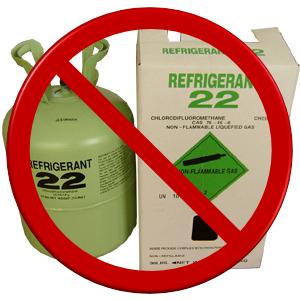
Since the introduction of the Montreal Protocol in 1987 98% of ozone depleting substances have been phased out of production and consumption.
HCFCs have been used as refrigerant gases since the complete phase out of the older CFC refrigerants. The most commonly used HCFC refrigerant is known as R22 and has been in widespread use in many applications.
Since 1 January 2015 the use of all R22 in the maintenance or servicing of existing refrigeration, air conditioning and heat pump equipment has been prohibited. Any operator of equipment running on R22 should consider the impact of this ban and ask for advice from a qualified and certified refrigeration and air-conditioning contractor to ensure that any business-critical equipment is retrofitted with an alternative gas or replaced. Operators of other equipment that is not considered business-critical may prefer to continue using the equipment; however, it is recommended that operators have a plan in place in the event that the equipment breaks down, as it will be illegal to service or maintain the equipment if it involves the use of R22.
Note that although equipment containing R22 can continue to be used from 1 January 2015, there can be no maintenance or servicing carried out on the equipment that involves breaking into the refrigerant circuits.
F-gases are the most common alternative to ODS, but their use is also controlled because they have a negative impact on climate change.
It should be noted that recovered refrigerant gas is considered a hazardous waste and must be managed accordingly. From 1 January 2015, there will be no legitimate use for any recovered R22, therefore it must be discarded and managed as a hazardous waste.
Any refrigerant gas recovered from equipment is considered a hazardous waste and must be managed accordingly. Operators should ensure that the contractor carrying out the work is appropriately qualified to do so, and that the waste refrigerant gas is handled by a person that is compliant with the waste management (collection permit) regulations.
Energy Audit Deadline Approaches
The EU Energy Efficiency Directive (2012/27/EU) was transposed into Irish law last October under the Energy Efficiency Regulations 2014. These regulations form the basis for Ireland’s commitment to meet its required energy efficiency and emissions targets. Under the remit of the SEAI, these new regulations will apply to “non-SMEs”, that is to say specifically large enterprises that fulfill either of the following criteria:
- Businesses with an excess of 250 employees on the payroll;
- An annual turnover of €50m or greater and a balance sheet total in excess of €43m.
Under Part 3 of the new regulations, large businesses that meet the required criteria will be required to conduct an energy audit of their operations every four years. The first of these audits is due for completion by the 5th of December 2015. As such there are two options for large businesses to demonstrate compliance:
1. To carry out an Energy Audit with a registered Energy Auditor. This can be carried out by either a third party auditor or by an in-house auditor provided they are registered under the Energy Audit Scheme. The SEAI has not provided a template for conducting audits but has instead directed business to the following documents for guidance:
- ISO 50002: 2014 Energy Audits: Requirements with guidance for use;
- EN16247 Parts 1-4 pertaining to audits of buildings, processes and transport;
- CIBSE AM5:1991 Energy Audits & Surveys
2. To provide evidence that they are implementing an Energy Management System (EMS). ISO 50001 Energy Management System certification is deemed appropriate provided that it meets certain criteria such as:
- The certification is valid on the 5th of December 2015;
- It can be demonstrated to the SEAI that the EMS incorporates a specific Energy Audit Element;
- The audit satisfies the minimum requirements set out in the Annex VI of Energy Efficiency Directive;
- The EMS covers more than 70% of your total primary energy usage and includes all categories of energy use (e.g. thermal, electrical and transport);
Exemptions are also in place for companies that hold a valid Greenhouse Gas Emissions Permit. That portion of the business is eligible for a derogation provided it can demonstrated that:
- Documentation of an exemption can be provided;
- The exemption only applies to energy use covered by the licence.
Currently the SEAI are considering applying exemption criteria, similar to that for the ISO 50001, to companies that have ISO 14001: Environmental Management System certification. Penalties for non-compliance will apply from 2016 onwards so it is advisable to meet the 5th of December 2015 deadline.
For a list of Registered Assessors or to find out more, follow the link below:
http://www.seai.ie/Your_Business/Energy-Auditing-Scheme/
New EPA EIA requirements for IE/IPC license applications
The following significant changes regarding EIA requirements when applying for a licence have recently been introduced by the EPA:
- Where the activity which is the subject of the licence/review application does not require Planning Permission the EPA requires confirmation in writing from the planning authority (Exemption Certificate) stating that this is the case.
- Where the activity which is the subject of the licence/review application has never required previous planning permission the EPA requires a letter of confirmation from the planning authority and/or An Bord Pleanála, stating that this is the case. Confirmation is also required whether an EIA has been carried out for any part of the site of the activity.
- Where the activity which is the subject of the licence/review application requires planning permission the EPA requires confirmation in writing from the planning authority or An Bord Pleanála stating that an EIA was not required as part of planning.
- Where the activity which is the subject of the licence/review application requires planning permission and an EIS is required then the requirements surrounding the EIS vary depending on the date of the applicant’s previous determination.
- For new licence applications OR review applications where the last licence (excluding reviews initiated by the EPA) was determined before 30th September 2012 and where planning permission has been/is required for the site of the activity, applicants must submit the most recent EIS associated with a planning application or planning permission for the site of the activity.
- For review applications where the last licence (excluding reviews initiated by the EPA) was determined after 30th September 2012 there is only a requirement to submit the most recent EIS which has arisen through the planning process since the last licence review. The planning decision and planners report associated with this EIS should also be submitted.
Climate Change Bill

The Irish Government has recently published draft legislation regarding Ireland’s policies to tackle climate change and to reduce Carbon emissions between now and 2050. This legislation, titled “The Climate Action and Low Carbon Development Bill 2015”, provides a framework for the creation of a series of five-yearly “National Low Carbon Transition and Mitigation Plans” (or “National Mitigation Plans”). These plans will set out Ireland’s approach to reducing Greenhouse Gas (GHG) emissions nationally in line with the EU’s "20-20-20" targets and our wider international commitments under the United Nations Framework Convention on Climate Change (UNFCCC).
These National Mitigation Plans will primarily focus on the emissions from; agriculture, energy production, transport and the built environment, as it is widely accepted that it is these sectors where the greatest mitigation is required. It is expected that these plans will introduce measures that will directly affect a range of business sectors through tighter regulation of GHG emissions. Coupled with this, are plans for local authorities to improve flood defences along with the protection of key infrastructure, such as power and communication from extreme weather. This should come as some relief to businesses, many of whom have been adversely affected by extreme weather events in recent years.
For now, the draft legislation does not include any new targets for GHG emission reductions and instead adopts the emission limits set out in existing EU legislation. The Climate Action and Low Carbon Development Bill 2015 can be viewed at www.oireachtas.ie/and the submission of views on the development of Ireland’s first National Mitigation Plan will run until Friday 31st July 2015 and can be sent to: